The Complete Guide to Mountain Bike Suspension Service Intervals
Start with the service schedule for your exact fork and shock. Riding conditions and symptoms can call for earlier inspection, while ride tracking helps you keep the schedule.
Updated September 13, 2026
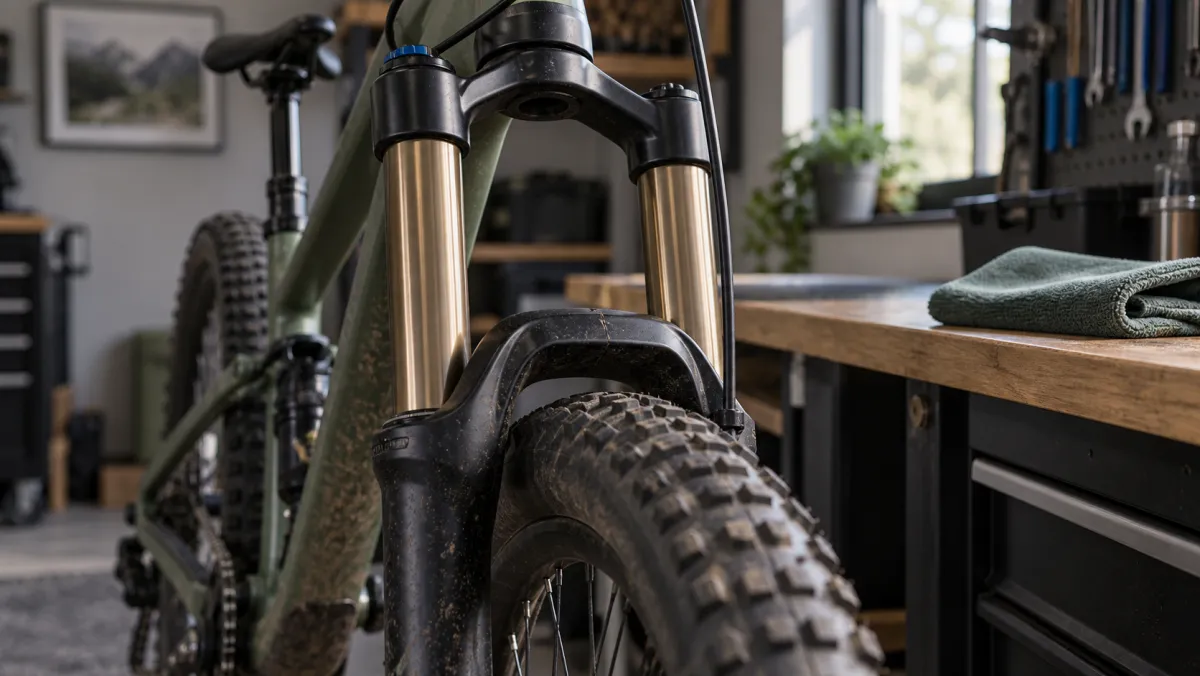
Start with Your Manufacturer’s Schedule
FOX’s service guidance recommends full service every 125 hours or annually, whichever comes first, with product-specific guidance taking priority. RockShox’s service guidance lists 50-hour lower-leg service for forks and model-dependent full-service intervals. Check your model and year rather than applying one number to every product.
A smooth climb and a rough descent can use the suspension differently, but rough climbs and flat trails also move it. Keep counting riding hours even when a route looks easy. A low estimated strain score is not a reason to extend the manufacturer’s service interval.
What Actually Determines Service Need
- 1. Descent frequency and severity. Repeated rough descents can increase suspension use. Gradient alone does not reveal impacts, compression cycles, or damper temperature; surface roughness, speed, line choice, and setup also matter.
- 2. Trail conditions. Keep dirt away from seals and follow the manufacturer’s cleaning instructions. Harsh conditions can justify more frequent service. A wet ride alone does not establish that water has entered a sealed damper.
- 3. Rider weight and bike setup. Use the spring pressure or spring rate and damping settings recommended for your bike and rider weight. Weight alone cannot tell you which rider’s suspension needs service sooner.
- 4. Temperature. Temperature can change how suspension feels. Check the product’s operating guidance and investigate persistent leaks or changes in damping rather than assuming temperature explains them.
Fork vs. Shock: Different Wear Profiles
Forks and rear shocks have different service procedures. Rear suspension behavior also depends on the frame’s leverage curve and spring/damper setup; the linkage does not remove the need for shock service.
Track fork lower-leg service, rear-shock air-can service where applicable, and full damper service separately. The correct sequence and interval depend on the exact products; neither end should be ignored.
Signs Your Suspension Needs Service
- Persistent oil leakage beyond the light film described as normal by the manufacturer
- Stiction (fork sticking instead of moving smoothly)
- A persistent change in small-bump response after checking setup
- Clunking or knocking sounds
- Loss of damping control: stop riding and arrange inspection
Use Tools That Fit the Service
Abbey Bike Tools’ Suspension Top Cap Sockets have no lead-in chamfer, helping them engage the shallow hex on compatible fork top caps. Their 3/8-inch drive accepts a torque wrench. Choose the exact size and tool interface specified for your fork; these sockets are not universal across all top-cap designs.
Start with the service manual for your model and year, including its pressure-release procedure, fluids, and torque values. A specialist tool helps with the job, but does not replace the procedure or the experience needed for internal suspension service.
Descent-Weighted Tracking
Trail Hits® uses available ride data to estimate suspension use, including descent time and gradient where available. Keep that context alongside riding hours and calendar-based service reminders. The result is an estimate of use, not a measurement of internal wear or remaining service life. GPS cannot measure seal condition, oil contamination, or every suspension movement.
Combined with condition multipliers (mud, wet, dust) and the Problem Solver for tuning, you can keep riding context and setup notes alongside your service history. Follow manufacturer intervals and have new symptoms assessed.
Track Suspension Use and Service
Use ride-based estimates alongside service hours, manufacturer schedules, and physical inspections.
Get Started Free